
Habit Design
Seven Morning Habits That Support a Steadier Metabolism
Metabolism is less a dial you turn than a rhythm you keep. These are the morning anchors worth building first.
August 24, 2026 · 7 min read
Ingredient Study
The most common ingredient in coffee-additive formulas, read honestly — what it plausibly does, how much appears in studies, and where the marketing overreaches.

By Elena Marsh, Contributing Editor, Nutrition & Metabolism
August 27, 2026 · 7 min read
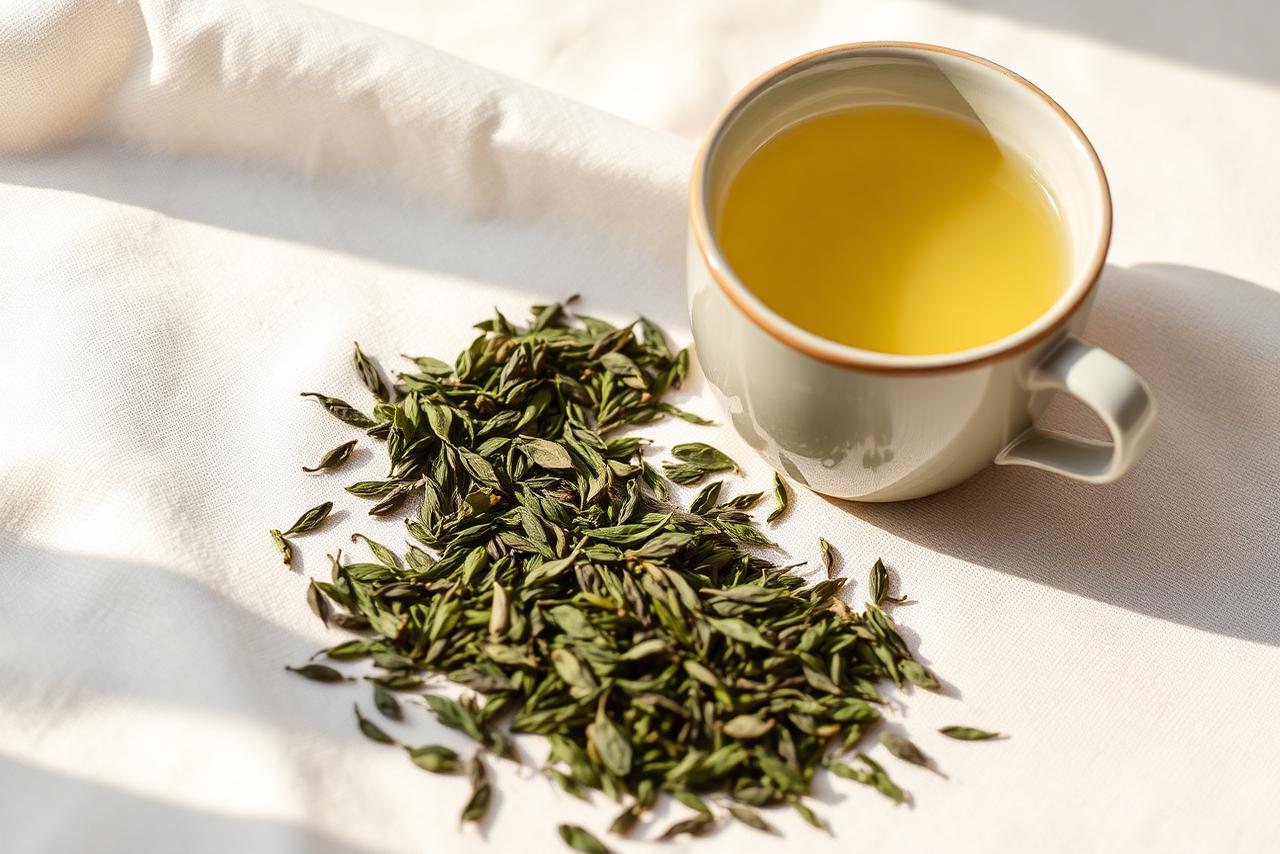
Green tea extract is a concentrated form of the same leaf you would steep in a cup, standardised for a family of polyphenols called catechins. The one that gets named on labels is EGCG — epigallocatechin gallate — because it is the most abundant and the most studied. A single mug of brewed green tea might deliver 50–100 mg of EGCG; a standardised extract in a supplement often carries several times that in a fraction of a teaspoon.
That concentration is the entire point of the format, and also the reason dose matters more than the ingredient name on the front of the tub.
Most of the human research on green tea catechins was run alongside caffeine, not instead of it. The two appear to work on the same modest pathway — a small, temporary lift in energy expenditure and fat oxidation — and the combination reads better in trials than either alone. This is why coffee additives are a sensible delivery format rather than a gimmick: the caffeine is already in the cup.
The gap between what the research shows and what a sales page implies is usually one of scale. A statistically detectable change in energy expenditure is not the same as effortless weight loss, and no serious reading of this evidence supports before-and-after photography. If a page tells you an extract melts fat while you sleep, the extract is not the problem — the page is.
The ingredient can be real and the promise still dishonest. Judge them separately.
Concentrated catechin extracts have been associated with rare liver-related reactions, mostly at high doses and on an empty stomach. Taking it with food or a milky coffee is the sensible default. Anyone pregnant, breastfeeding, on prescription medication, or with liver concerns should ask a clinician before adding it — and that advice is not a formality.
About the author
Contributing Editor, Nutrition & Metabolism
Elena Marsh writes about metabolism, habit design, and the small rituals that make mornings work. She has spent nine years reporting on the supplement industry and reads label panels for fun.
Related
Habit Design
Metabolism is less a dial you turn than a rhythm you keep. These are the morning anchors worth building first.
August 24, 2026 · 7 min read
Explainer
Why your second cup does less than your first, and how to time caffeine so the afternoon does not collapse.
August 17, 2026 · 6 min read

Field Notes
No phases, no cleanses. A quiet framework built on protein, walking, sleep and a time horizon measured in months.
August 9, 2026 · 8 min read