How memory works—and what everyday forgetfulness can mean
You walk into a room and forget what you came for. It is frustrating, but that moment alone does not tell you what is happening to your memory. Start by noticing the pattern, not by buying a solution.
Published by Maiko Santos · Educational editorial summary · Not medically reviewed
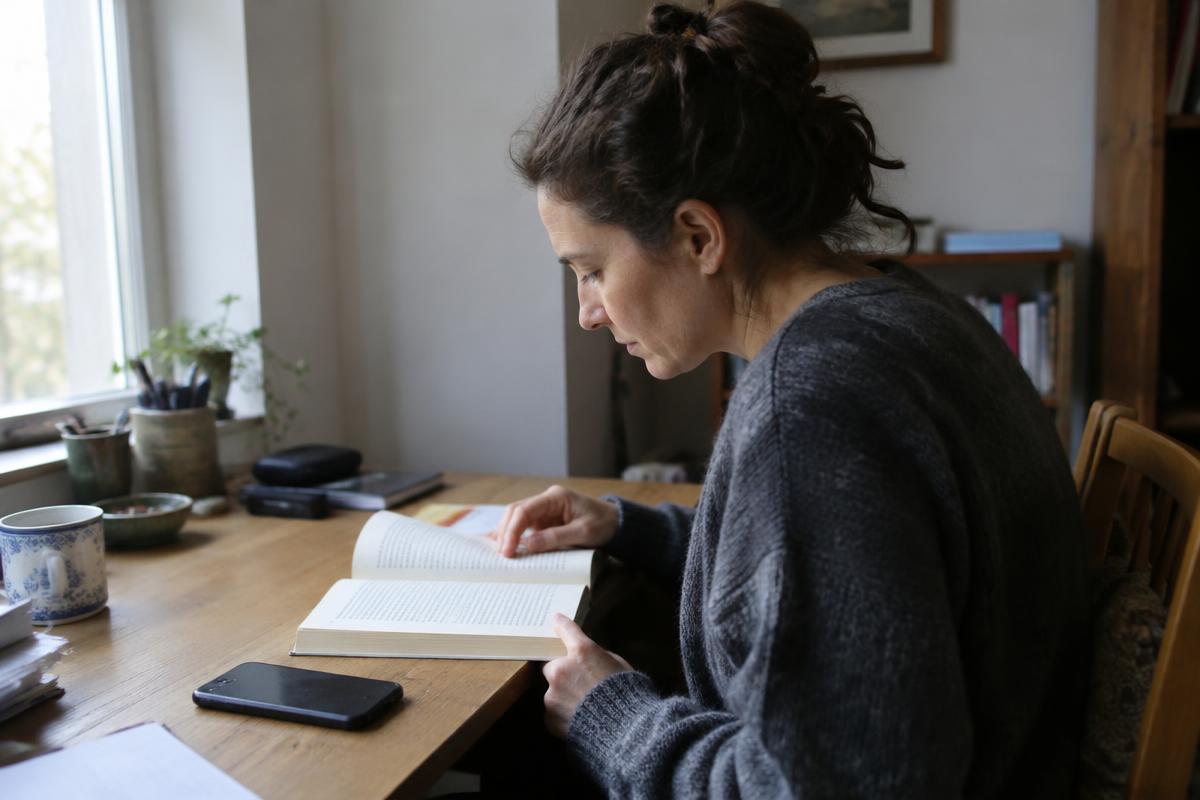
Illustrative photography; not a reader testimonial. Editorial and affiliate policy

The short answer
Memory depends on taking in information, keeping it, and retrieving it. A distracted moment is not the same thing as progressive memory loss.
Remembering starts before you try to recall
Think of remembering an appointment as a sequence. First you notice the date. Then you connect it with something meaningful and store it. Later, a calendar alert or a conversation helps you retrieve it. If you were dividing your attention when the date was mentioned, the information may never have been learned clearly.
This is a useful everyday model, not a diagnostic test. Sleep, mood, medication effects, illness, and age can all influence thinking. An article cannot tell which factor applies to an individual reader.
A slower recall is not automatically a disease
The National Institute on Aging explains that occasional forgetfulness can occur with age. Taking longer to remember a name is different from repeatedly getting lost in a familiar place or being unable to follow a familiar recipe. Older adults can still learn new skills and form memories.
Do not use age as a reason to dismiss changes that interfere with daily life. If a family member notices a developing pattern, bring concrete examples to a healthcare appointment rather than guessing at the cause.
External reminders are tools, not failures
A calendar, a written shopping list, and a consistent place for your keys reduce the number of small details you need to hold in mind. Pick one reminder system and use it consistently. Having three half-used calendars usually adds work rather than reducing it.
When learning something new, give it your full attention and revisit it later. This is a practical learning strategy, not a promise of preventing cognitive decline. Sleep is part of the foundation too; trying to compensate for ongoing poor sleep with a memory product misses that context.
A practical place to begin
- Write appointments in one calendar as soon as you make them.
- Keep everyday essentials in the same visible place.
- Notice whether forgetfulness follows poor sleep, interruptions, or a recent medication change; discuss the pattern with a clinician.
- Bring a brief list of specific examples to an appointment if changes persist.
Questions worth asking
Can healthy adults still learn as they age?
Yes. NIA describes continued ability to learn new skills and form memories in older adulthood, even when some tasks take longer.
Does forgetting a name mean dementia?
Not by itself. Frequency, change over time, and interference with daily life matter. A clinician can assess concerning changes.
Take the next step without rushing
Start with the daily context, choose one manageable action, and ask for help when symptoms persist. A useful decision may mean changing a habit, booking an appointment, reading more—or buying nothing.
Continue readingSources and evidence
- NIA: Memory Problems, Forgetfulness, and Aging (opens in a new tab)
- NIA: How the Aging Brain Affects Thinking (opens in a new tab)
Public-health guidance is context, not an endorsement of this publication or any product. Practical suggestions are editorial adaptations, not tested treatment protocols.
The information provided on this website is for educational and informational purposes only and is not intended as medical advice. Always consult a qualified healthcare professional regarding any health concerns.
This website may contain affiliate links. If you purchase through these links, we may earn a commission at no additional cost to you.