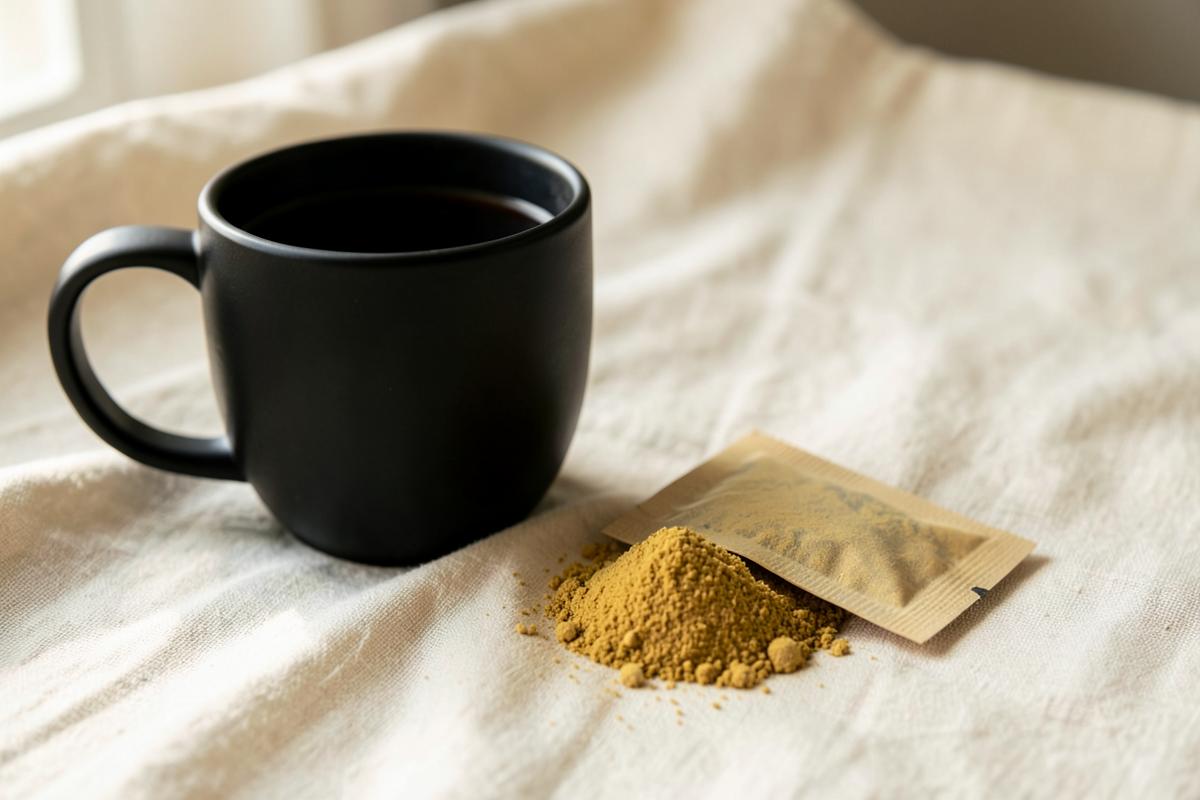
Explainer
What Is Java Burn? A Plain-Language Explanation
Before the reviews and the opinions: what the product physically is, how it is meant to be used, and what category it belongs to.
September 3, 2026 · 6 min read
Label Reading
A common question with a nuanced answer: what the label determines, what your coffee contributes, and how to keep your total intake sensible.

By Elena Marsh, Contributing Editor, Nutrition & Metabolism
September 2, 2026 · 6 min read
Formulas are reformulated and packaging changes, so the only dependable answer to "how much caffeine" is the supplement facts panel on the pouch you are holding or the one shown on the official product page at the time you buy. Third-party pages quoting a figure from an older version are a common source of confusion.
Look for two things: whether caffeine is listed as its own line item with a milligram amount, and whether caffeine-containing extracts such as green tea appear inside a proprietary blend, where individual amounts are not disclosed.
A brewed cup of coffee generally supplies far more caffeine than a supplement designed to be added to it. Whatever the sachet contributes, the size and strength of your cup — and how many cups you drink — is normally the larger variable.
If you add a supplement to your morning cup, the sensible adjustment is not to add a second cup on top. Keep an afternoon cut-off, since sleep quality is itself a metabolic variable, and pay attention to jitteriness as a signal rather than a side note.
Total daily caffeine is the number that matters, not the number on any single label.
Reader questions
About the author
Contributing Editor, Nutrition & Metabolism
Elena Marsh writes about metabolism, habit design, and the small rituals that make mornings work. She has spent nine years reporting on the supplement industry and reads label panels for fun.
Related
Explainer
Before the reviews and the opinions: what the product physically is, how it is meant to be used, and what category it belongs to.
September 3, 2026 · 6 min read

Evidence Review
The question everyone types into Google. The answer requires separating ingredient research from product claims — and being clear about what neither can promise.
September 3, 2026 · 8 min read

Buyer's Guide
The product is sold direct, the presentation opens with a video, and the refund terms only exist on that page. Here is what a legitimate order page looks like.
September 3, 2026 · 6 min read